The Mise en Place Myth: Every Ingredient Need Not Be Prepped First
Mise en place for home cooks works best selectively: learn what to prepare before heating the pan and what can wait without crowding your counter.
Mise en place for home cooks does not mean filling every ramekin before you turn on the hob. It means having the right things ready at the right time. A bowl of chopped herbs can help; a crowded counter of ingredients that will not be used for half an hour can make dinner feel harder than it is.
The useful question is not “Have I prepped everything?” but “What would interrupt this particular cooking session?” A little advance work protects the moments when heat, timing or attention will be tight. Everything else can often stay whole, wait in its packet or be prepared as you go.
Prep by pressure
Sort ingredients according to what the cooking process will demand of you. If a pan needs several ingredients in quick succession, prepare those before the pan gets hot. If a dish has a long, quiet simmer, you may have time to chop the next ingredient while it cooks.
This is especially helpful in home kitchens, where one person may be cooking, answering a question and keeping an eye on something else. A recipe’s ingredient list tells you what goes into the dish; its method tells you when your hands will be needed.
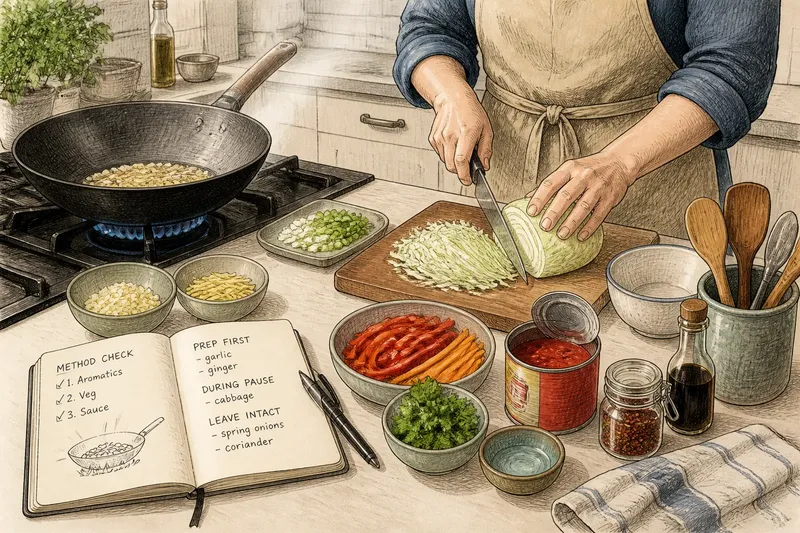
- Prepare first: ingredients added close together over high heat, such as chopped garlic and ginger for a fast stir-fry.
- Prepare during a pause: vegetables to add after a sauce has begun simmering, if the pan can be left safely unattended for a moment.
- Leave intact: ingredients that need no cutting or measuring until later, such as a lemon for a finishing squeeze.
Think of preparation as a small buffer, not a ceremony. The right buffer prevents a rushed scramble without making the whole worktop an obstacle course.
Choose your situation
If the cooking is fast
For a quick dish with a hot pan, prep the ingredients that must go in rapidly and in order. A stir-fry, omelette or quick tomato sauce can change from ready to overdone while you search for the knife or open a packet. Chop, measure or open those particular items before heating anything.
Keep the rest simple. If spring onions are added at the end, slice them during an earlier pause or just before serving. There is little benefit in chopping them long beforehand if that leaves them taking up space and your attention.
If the recipe has a long pause
A stew, baked dish or gently simmered sauce often creates a natural window for the next small task. Once the pot is settled, you might peel a carrot or measure a later addition. This suits cooks who prefer a moving, low-clutter routine to a counter covered in prepared ingredients.
Use that window only if the food can be left safely and the recipe does not require constant stirring. If you need to stay beside the pot, prepare more before it starts instead. The method—not the name of the dish—decides whether the pause is real.
If you are new to a recipe
Prepare more of the easily overlooked items before starting: open tins, locate the stock, measure a spice blend, and set out the right pan. New methods take attention because you are still learning what each stage looks like. Removing small searches can make that first attempt easier to follow.
You do not have to pre-cut every vegetable to get this benefit. Read the method once, mark the moments when ingredients are added together, and prepare those groups. Leave tasks tied to obvious pauses for later if you feel comfortable doing so.
If the counter is small
On a compact worktop, a pile of bowls can crowd out the chopping board. Keep the knife, board and a rubbish bowl accessible, then use one plate or a few small dishes for ingredients that genuinely need to wait ready. Whole vegetables and unopened packets can remain to one side until their turn.
If you share a kitchen, stage only what you will use soon. That leaves room for another person to reach the sink or cupboard without moving a row of prepared ingredients. Clear surfaces are not merely tidy; they make the next action easier to see.
What should be ready?
Do I need to chop everything first?
No. Chop first when the ingredient will be needed during a busy stretch, or when cutting it later would interrupt a delicate stage. If it can wait through a simmer or bake, prepare it during that pause instead.
Should I measure every ingredient?
Measure ingredients that must be added together or whose quantity is easy to lose track of, such as a small amount of spice in a crowded recipe. For flexible additions such as chopped parsley, you can often keep the bunch intact and take what you need at the end.
Can I prep while something cooks?
Yes, if the cooking stage allows you to step away without neglecting the food. A quiet simmer may offer a useful pause; a pan that needs constant stirring does not. If you are unsure, do the preparation first and keep the next step within reach.
What if the recipe gives no timing clues?
Read the method before starting and group ingredients by the sentences in which they appear. Anything called for in the same rapid sequence should be ready together; ingredients introduced after a longer cooking stage can usually wait.
Group by cooking moment
Instead of arranging every ingredient in a separate bowl, make small groups that match the method. For a sauce, that might mean one dish for onion and celery, another for the garlic that follows, and a nearby tin of tomatoes ready to open. The groups should reflect when items go in, not simply where they appear on the recipe page.
Imagine you are making a quick noodle supper and the method adds sliced cabbage after the aromatics have softened. You could chop the garlic and ginger first, start them in the pan, then slice the cabbage during the gentle cooking pause. The likely result is a clearer counter and fewer bowls, while the ingredients still reach the pan in the order the recipe needs.
For ingredients that can be measured directly into the pot, skip the extra dish. A measuring spoon can move from jar to pan, and a tin can be opened at the point it is needed. This keeps the work surface lighter, provided the next action is not so rushed that handling the container becomes awkward.
Know when to stop
Preparation has diminishing returns. Once the urgent ingredients are ready, more chopping and portioning may create extra washing-up without making the cooking easier. Pause and ask whether each prepared item has a clear place in the sequence and whether it needs to be ready now.
For ingredients that brown, wilt or lose their appeal after cutting, avoid preparing them far in advance unless the recipe calls for it. Keep them whole until their turn where practical. Follow the recipe and the product’s storage directions for ingredients that need particular handling.
At the end of a session, notice where you had to stop cooking to search, chop or measure. That is the useful evidence for next time: prepare that item earlier, rather than adopting a rule to prep everything. Mise en place for home cooks is most effective when it solves the interruption you actually face—and leaves the rest of the counter free.