Cast Iron or Stainless Steel for a Weeknight Skillet?
Cast iron or stainless steel for a weeknight skillet? Match the pan to your usual dishes, heat habits and clean-up routine before choosing.
Cast iron or stainless steel for a weeknight skillet? The better choice depends on what you cook, how quickly you need to change the heat and how much care you want after dinner. Both can brown food well, but they ask for different habits.
Cast iron holds heat and develops a seasoned surface. Stainless steel responds more readily to hob adjustments and suits acidic ingredients without relying on seasoning. Those differences shape ordinary cooking, from frying eggs to finishing a tomato sauce.
Match the pan to dinner
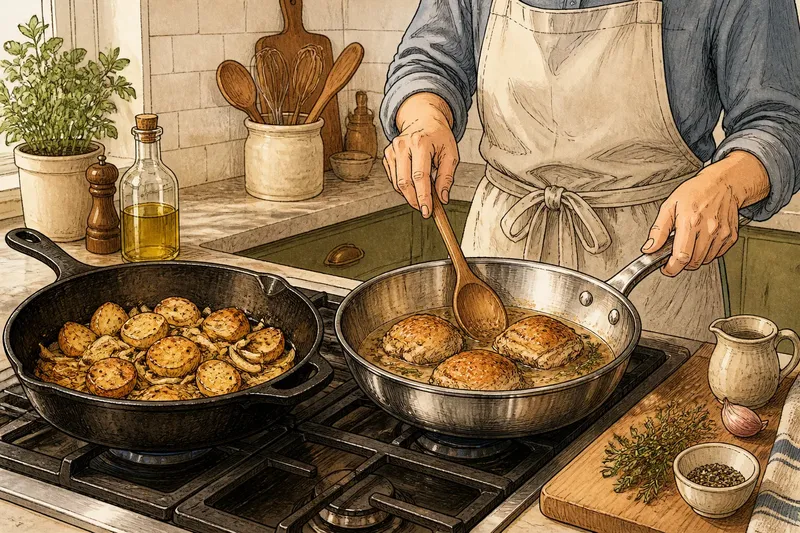
Cast iron suits food that benefits from steady, retained heat. A thick skillet can brown sausages, crisp potatoes or colour chicken thighs once it has warmed through. Its thermal mass also helps when cool ingredients might otherwise make a lighter pan’s temperature dip.
Stainless steel suits dishes that move from browning to sauce-making. Brown chicken, soften aromatics in the same pan, then loosen the browned bits with stock or wine. Those savoury deposits, often called fond, can be stirred into the liquid.
For a quick stir of sliced vegetables, responsive heat may matter more than stored heat. For crisp-edged potatoes, a heavy skillet’s steadiness may be welcome. Start with the meals you cook most, rather than an idealised list of what a pan ought to do.
Read the heat
Cast iron takes time to warm through, then holds heat for longer. That can help when food goes into the pan in batches, but it also means the surface cools slowly if food starts smoking or a sauce boils too hard. Turning down the hob does not immediately cool the pan.
Stainless steel heats and cools more readily, although the response depends on its construction and your hob. Adjusting the burner can have a more noticeable effect when a recipe shifts from a lively sizzle to a gentle simmer. Preheat it for browning; food put into a cold pan can stick.
With either material, choose a burner that suits the base and avoid treating maximum heat as the default. If food browns too quickly, reduce the heat and, if needed, move the pan off the burner briefly. That pause matters especially with cast iron.
Understand sticking
Stainless steel is not non-stick. Food can cling if the pan is too cool, too hot or crowded, or if you move it before a browned surface forms. A piece of meat often releases more easily as its crust develops; forcing it loose too early can tear the surface. A thin film of cooking oil helps, but heat and timing matter too.
Well-seasoned cast iron can be more forgiving with many foods. Seasoning is a baked-on layer of oil, not a permanent coating that prevents every sticking problem. Delicate eggs may still catch if the skillet is cold, poorly seasoned or heated too aggressively.
If easy release for fragile foods is your main concern, a separate non-stick pan may be more suitable. For browning and pan sauces, either cast iron or stainless steel can work once you learn its response.
Handle acidic sauces
Stainless steel is straightforward for tomato-based dishes, wine reductions and other acidic cooking. It does not depend on a seasoned layer, so it is an easy choice when a skillet will hold a sauce for a while or move from browning directly to simmering.
Cast iron can cook acidic ingredients, but prolonged contact may affect the seasoning and sometimes lend food a metallic note, particularly while the seasoning is still developing. A brief splash of wine to deglaze is different from simmering tomato sauce at length. For a long, tangy sauce, stainless steel is the simpler fit.
If your usual skillet meal ends with lemon, tomatoes or vinegar, stainless steel avoids the need to think about the seasoning layer. If the pan mostly sears or fries food without a long acidic finish, cast iron’s heat retention may be more useful.
Compare the clean-up
Stainless steel usually tolerates soaking and ordinary washing-up liquid. Warm water and patience can loosen stubborn browned patches. Heat tint and water marks may appear, but are generally cosmetic; the routine task is to remove food residue without leaving a greasy film.
Cast iron needs a dry finish. Wash away food, dry the pan thoroughly and wipe on a very light coating of oil if its surface needs it. Water left in the skillet can invite rust. The routine is simple, but it calls for attention before the pan goes away.
Care depends on the pan’s construction, surface treatment and maker’s instructions. Check those instructions where they apply, especially for enameled cast iron: its care differs from bare cast iron, and the enamel is not a seasoning layer.
Consider weight and storage
A cast-iron skillet is heavy, especially when full. Its weight helps retain heat, but can make tossing vegetables, pouring or washing at the sink less comfortable. Think about the whole routine, including carrying the pan from hob to table.
Stainless steel skillets vary in weight. A lighter model is easier to manoeuvre, while a heavier, multi-layer pan may feel steadier. If you can, check the handle and balance in a shop; a pan that feels awkward when empty may be harder to control when full.
Storage counts too. Cast iron can be cumbersome in a crowded cupboard, while some stainless pans stack neatly. For a hook or open shelf, consider whether the pan’s weight and handle position suit the spot.
Work through a weeknight choice
Imagine you cook chicken thighs on a stainless-steel skillet, then want a quick sauce. The starting ingredients are chicken, a little oil, stock and herbs. Preheat the pan, brown the chicken, turn down the burner, add stock to loosen the fond and stir in the herbs. The resulting decision is clear: stainless steel suits this meal because it handles both browning and the sauce, including its liquid finish, in one pan.
Now imagine your usual supper is potatoes and onions cooked until their edges turn crisp, with no sauce to make. Cast iron’s stored heat may suit that rhythm if you can allow time for preheating and dry the pan after washing. If lifting a heavy skillet or tending its surface would disrupt your evening, choose stainless steel instead; convenience may matter more than retained heat for this routine.
These are choices, not rules. Someone who prefers a lighter pan may use stainless steel for potatoes; someone comfortable managing cast iron may use it for many meals. Let recurring dishes and clean-up preferences carry more weight than a single recipe’s ideal pan.
Which skillet fits your cooking?
Is stainless steel easier for beginners?
It can be easier to care for and adjust during cooking, but food may stick until you learn to preheat the pan and wait for browning. Beginners who prefer heat retention and are happy to dry a pan carefully may also get on well with cast iron.
Can cast iron go on a weeknight hob?
Yes, if the hob and pan are compatible and you can manage the weight. Warm it gradually and give it time to heat through instead of expecting an immediate response to the burner.
Which pan suits a pan sauce?
Stainless steel is often the simpler choice, especially when the sauce includes wine, tomatoes or citrus. Cast iron can work for a quick deglaze, but a long acidic simmer is less kind to its seasoning.
Do I need both skillets?
No. Choose the pan that suits the dishes you cook most often and the care routine you will keep up with. A second pan makes sense if it fills a distinct role, such as pairing cast iron’s heat retention with stainless steel’s easy sauce-making.
Choose for your routine
For a weeknight skillet, cast iron favours sustained heat and a seasoned surface; stainless steel favours responsive control, straightforward washing and acidic sauces. Those differences are more useful than claims that one material is always superior.
Before buying, name a few meals you make often and follow each from preheating to washing-up. If your choices lean towards crisp browning and you are content to dry and oil the pan as needed, cast iron may fit. If they lean towards quick heat adjustments and sauces, stainless steel may suit your weeknight skillet better.