Why a Pinch of Salt Can Change More Than Saltiness
Why a pinch of salt can change more than saltiness: learn to spot flat, harsh or muted flavours and adjust a dish by tasting as you cook.
A pinch of salt can make a tomato taste more like itself, not simply saltier. That is why the amount in a recipe is only a starting point: ingredients, cooking and your own palate all shape what the dish needs. Tasting as you cook helps you diagnose the flavour, then add salt only when it is the right fix.
When flavours seem flat
What you notice: A soup or sauce tastes dull, though its ingredients seem sound. The common cause is not always too little salt. Acidity, sweetness, bitterness and savoury depth can all be out of balance, and a flavour may seem muted when another element dominates.
What to try: Taste a spoonful before reaching for the salt cellar. If the dish seems flat but not sour, a small addition of salt may help its existing flavours register more clearly. Stir, let the seasoning disperse, then taste again. If it remains dull, consider whether it needs something else: a squeeze of lemon for brightness, a little vinegar for lift, or more cooking time for a watery sauce to concentrate.
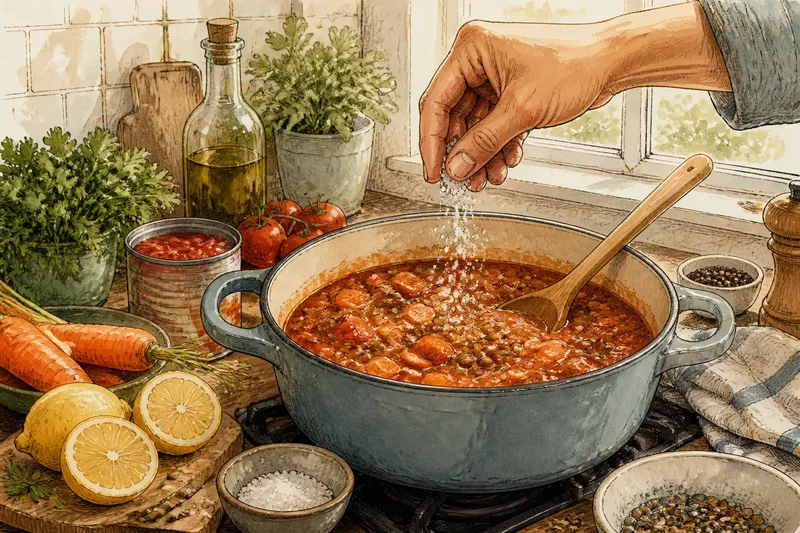
Say you are making a pot of lentil soup with carrots and tinned tomatoes. If it tastes muted after the lentils soften, add a little salt, stir and taste a fresh spoonful; the tomato and carrot flavours may become easier to distinguish. If instead the soup already tastes salty but still feels heavy, lemon is a more sensible next move than another pinch.
When sweetness takes over
What you notice: A tomato sauce tastes sugary, or roasted vegetables seem cloying. Naturally sweet ingredients can become more prominent as they cook, especially when moisture evaporates. Salt may make the overall flavour feel more balanced, but it cannot remove sugar or undo concentrated sweetness.
What to try: Taste for the source of the imbalance. If the food is merely a little sweet and otherwise under-seasoned, add salt gradually and reassess. If it is already properly seasoned, try a contrasting flavour instead: a splash of vinegar in a sauce, or an acidic dressing over sweet vegetables. Add it cautiously, since sharpness can become the next imbalance.
Salt changes perception, not the basic identity of an ingredient. A salted orange may seem brighter and more vivid, while an extra pinch in an already seasoned fruit salad can make the whole bowl taste harsh. The useful question is not “Would more salt improve this?” but “What is the flavour problem I can actually taste?”
When bitterness lingers
What you notice: Greens, coffee, charred vegetables or dark chocolate leave a bitter edge. Salt can soften the impression of bitterness in some foods, but it is not a universal antidote. Excessive browning, burnt garlic or an overcooked ingredient may be the real source.
What to try: Check the food itself before seasoning. If a portion is burnt, adding salt will not repair it; remove the bitter pieces if practical, or balance the dish with an ingredient that suits it, such as cream with bitter greens or a fresh dressing with roasted vegetables. If the bitterness is part of the ingredient’s character rather than a cooking fault, a modest amount of salt may make its other flavours easier to notice.
Keep the distinction clear: a dish can taste more rounded without becoming less bitter. Add a little, mix well and taste. If the bitter note still dominates, stop salting and choose a different adjustment.
When saltiness arrives too soon
What you notice: A dish tastes salty before its other flavours have come together. Common sources include salted stock, cheese, cured meat, olives, soy sauce or water left on brined ingredients. Each may contribute salt before you reach for the shaker.
What to try: Pause additions and check the components. If the dish is still being cooked and has room, unsalted ingredients such as vegetables, beans or pasta may spread the salt through more food. A little water or unsalted stock can also loosen a soup or sauce, though it may dilute its flavour as well. Avoid adding more salt simply because the dish tastes incomplete; identify whether it needs acidity, aroma or texture instead.
For a dish that is already too salty, there is no seasoning trick that removes salt. Dilution or adding compatible unsalted ingredients may help, but each changes the dish’s volume and character. Make a small adjustment, then taste again before committing to more.
When the pot and plate differ
What you notice: A sauce tastes balanced from the spoon but seems under-seasoned over pasta, rice or potatoes. The starch changes the overall bite, and a topping such as unsalted yoghurt can soften the seasoning further. A taste taken from the pot alone may not represent the finished mouthful.
What to try: Taste the dish in the form you plan to serve it. Put a little sauce on a forkful of pasta, or try a spoonful of stew with its usual bread. Season the shared component with restraint, then check again with the accompaniment. This is particularly useful when cooking for others, whose portions and preferred additions may differ.
How should you taste as you cook?
How much salt should you add first?
Begin with less than you think the dish may need, especially when stock, cheese or sauces contribute salt. Add a small amount, mix thoroughly and wait briefly for it to disperse before tasting again.
When is the best time to taste?
Taste after a meaningful change, such as adding stock, reducing a sauce or stirring in cheese. Check again near serving, when the final ingredients and accompaniments are present.
Why does the same dish need different seasoning?
Ingredients vary in saltiness, ripeness, moisture and intensity, while cooking can concentrate or dilute their flavours. A recipe’s amount cannot account for every pot, so use it as a guide and let the taste of your food decide.
What if I cannot tell what is missing?
Take a small pause and name the sensation: flat, too sweet, bitter, sour or salty. Change one thing at a time, using a tiny amount, so you can tell whether the adjustment helped.
Trust the tasting spoon
Salt earns its place by helping a dish’s flavours come into focus, but it is only one tool among several. When you taste as you cook, you can separate a lack of seasoning from a need for acid, more cooking or a different balance. Keep the recipe’s salt amount as a reference, taste the food you are actually serving, and let each small adjustment answer a specific flavour problem.